The Decision Review System (DRS) stands as one of the most transformative technological innovations in modern cricket. Whether observing a grinding five-day Test match, an intense One Day International, or a fast-paced T20 match, the ability for captains and batters to challenge an on-field umpire’s decision adds strategic depth and fairness to every contest. Designed primarily to eliminate clear human error without undermining the authority of match officials, the system has reshaped match tactics and player dynamics across international formats.
What Is the Decision Review System?
Introduced by the International Cricket Council (ICC) to minimize costly umpiring mistakes, the Decision Review System allows teams to officially request a third umpire re-examination of dismissal calls using state-of-the-art technology.
Read Power Play in Cricket to a relevant our article about Power Play in Cricket
A player review can only be invoked for potential dismissal events, such as Leg Before Wicket (LBW) or caught behind. The third umpire analyzes live tracking data, thermal signatures, and multi-angle camera replays to determine whether to uphold or overturn the on-field decision.
Evolution and History of DRS in Cricket
The origins of technology-assisted decision-making date back to 1992, when the third umpire was first introduced to evaluate run-outs and line calls via basic video replays. However, the modern Decision Review System player challenge structure was first trialed during the Test series between India and Sri Lanka in July 2008.
The ICC officially adopted DRS for Test cricket in late 2009. Over time, the technology expanded to One Day Internationals in 2011 and T20 Internationals in 2017. Major regulatory revisions—including the protection of review attempts during marginal “Umpire’s Call” decisions—have refined the system into a fundamental pillar of global cricket governance.
Core Technologies Behind the Decision Review System
The modern Decision Review System relies on three distinct technological components to deliver fast and accurate verdicts:
- Ball-Tracking (Hawk-Eye / Virtual Eye): Uses a network of synchronized high-speed cameras positioned around the stadium to build a 3D trajectory model of the ball’s flight. It predicts whether an unhindered delivery would have hit the wickets, measuring pitching position, impact point, and trajectory with millimeter precision.
- Sound & Edge Detection (UltraEdge / Snickometer): Employs directional, high-sensitivity microphones embedded in the stumps. By synchronizing audio frequency spikes with slow-motion visual frames, the third umpire can detect microscopic contact between the ball and the bat or glove.
- Thermal Imaging (Hot Spot): Uses sensitive infrared cameras located at both ends of the ground to measure heat generated by friction when the ball strikes the bat, pad, or body. A bright white spot indicates precise contact.
Review Limits Across Cricket Formats
Under current ICC rules, each team receives a specific allocation of unsuccessful review requests per innings:
- Test Cricket: Each team is allowed 3 unsuccessful reviews per innings.
- One Day Internationals (ODIs): Each team is allowed 2 unsuccessful reviews per innings.
- T20 Internationals (T20Is): Each team is allowed 2 unsuccessful reviews per innings.
Rule Note: Unused reviews in T20Is do not carry over to subsequent innings. Each team’s review count resets strictly at the start of every new innings.
How the Decision Review System Process Works Step-by-Step
Read Consult the official ICC Playing Conditions on ICC for exact tournament regulations.
- On-Field Decision: The primary umpire makes an initial call (“Out” or “Not Out”).
- 15-Second Timer: The dismissal triggers a 15-second countdown timer. The batter or fielding captain must form a clear ‘T’ sign with their hands to request a review before time expires.
- Third Umpire Referral: The on-field official signals a TV screen shape to initiate communication with the third umpire booth.
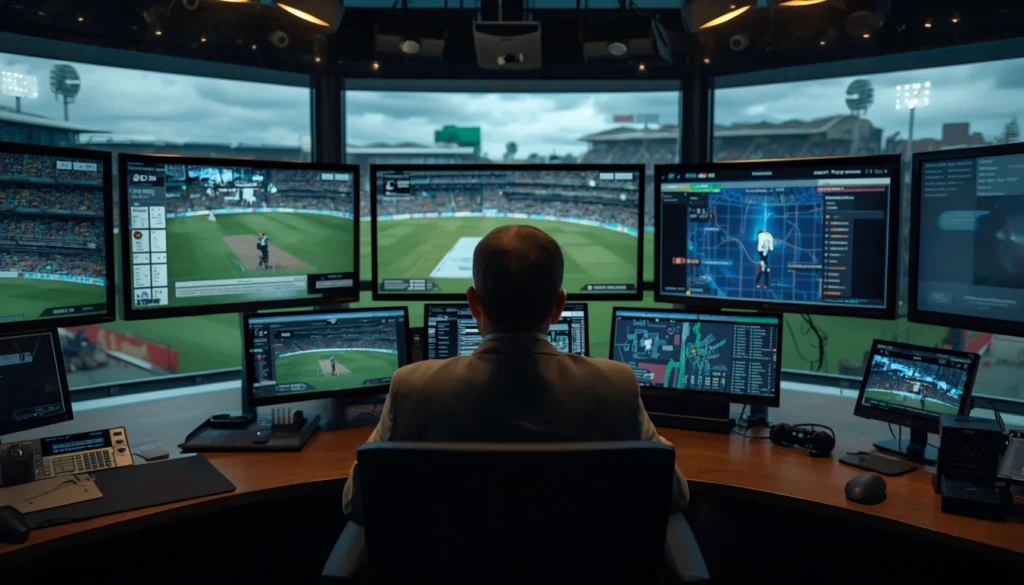
- Technology Protocols: The third umpire systematically checks:
- Legality of the delivery (No-ball check).
- UltraEdge / Hot Spot for potential bat contact.
- Ball-tracking for pitching, impact, and hitting the wickets (for LBW).
- Final Verdict: The third umpire instructs the on-field umpire to either uphold or overturn the original decision. If the verdict results in an “Umpire’s Call,” the original call stands, and the reviewing team retains its review attempt.
Common Misconceptions About DRS
A widespread myth is that the Decision Review System completely replaces human judgment. In reality, the system incorporates the “Umpire’s Call” parameter to account for marginal predictive tolerances in ball-tracking software, respecting the official’s original on-field assessment when evidence remains inconclusive.
Furthermore, player-initiated reviews are strictly confined to potential dismissal events. Teams cannot challenge boundary calls, wides, or standard no-balls via player DRS, although on-field officials independently consult the third umpire for line calls and boundary checks.
Frequently Asked Questions
1. What does DRS stand for in cricket?
Ans. DRS stands for the Decision Review System. It is an official technology-based process that allows players to challenge on-field dismissal decisions.
2. What happens to a team’s review limit during an “Umpire’s Call”?
Ans. When a review verdict results in an “Umpire’s Call,” the original on-field decision is upheld, but the reviewing team does not lose its review attempt.
3. How many DRS reviews are allowed in a T20 International?
Ans. In T20 Internationals, each team is allocated 2 unsuccessful reviews per innings. Unused reviews do not carry over to any future innings.
4. Can a batter use DRS to challenge a wide or boundary call?
Ans. No. Player-initiated DRS requests are strictly limited to dismissal events like LBW or caught appeals. Boundary checks and wides are monitored directly by match officials through umpire referrals.
5. How much time does a team have to signal a DRS challenge?
Ans. Players have exactly 15 seconds from the moment the ball becomes dead following a decision to signal a review using a ‘T’ gesture.