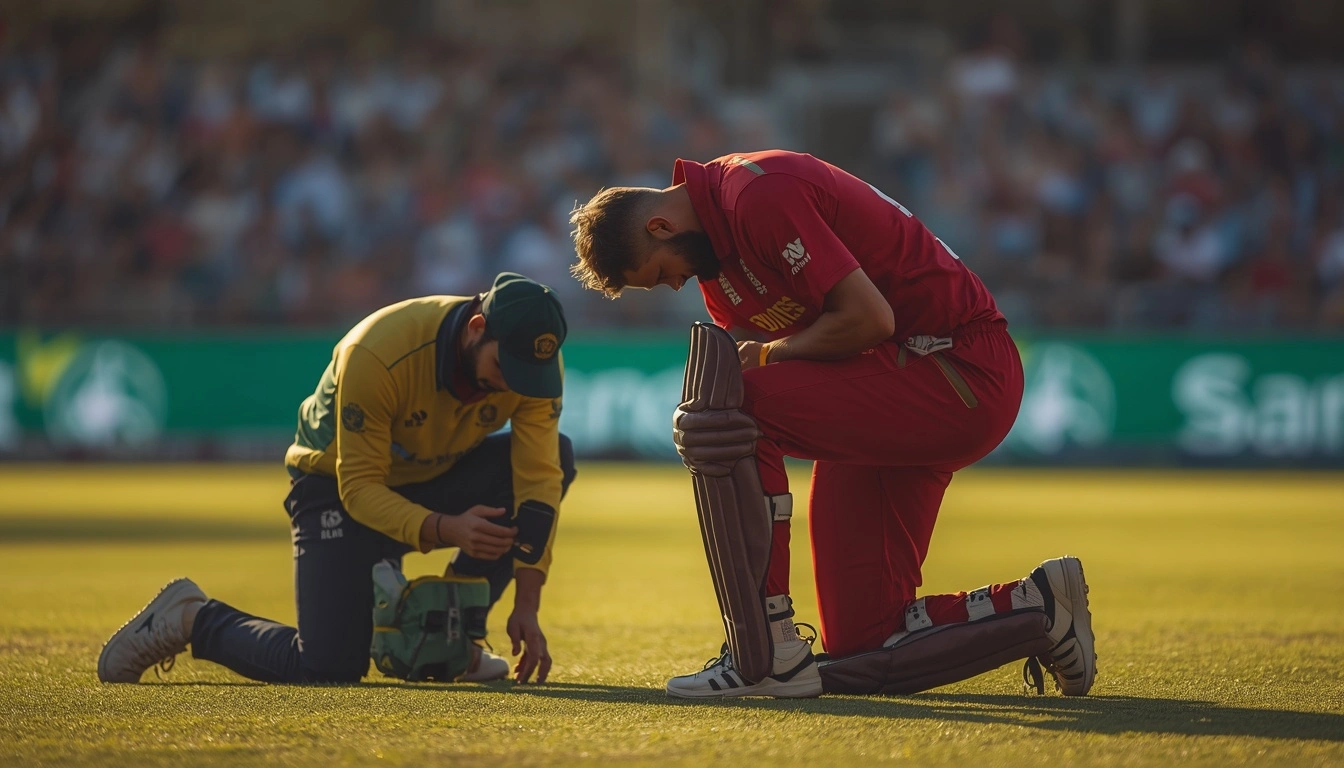
While cricket was historically viewed as a game of leisure, modern international standards require elite athleticism, rapid reaction times, and deep physical endurance. From sprinting between the wickets to delivering 140+ km/h fast bowling spells or diving in the boundary ropes, modern cricketers are elite multi-sport athletes. Implementing a dedicated cricket fitness guide enables players across all competitive levels to develop explosive power, maintain field endurance, and significantly lower their risk of career-threatening injuries.
The modern game places severe physical demands on the human body across all formats—from three-hour T20 matches to grueling five-day Test encounters. Achieving peak match readiness requires a structured approach that targets five key biomechanical pillars: strength, speed/agility, aerobic capacity, joint mobility, and targeted recovery.
Also read The best Cricket Gears & Equipment on our SportsZa articles.
The 5 Essential Pillars of Cricket Fitness Guide
To build an adaptable athletic base, every player must structure their off-season and in-season physical preparation around five core training disciplines:
1. Strength Training & Rotational Power
Cricket is inherently asymmetric and highly explosive. Power hitting relies on rotational force generated through the hips and core (often measured as the “X-factor” torque between the pelvis and shoulders). Meanwhile, fast bowlers endure ground impact forces exceeding 5 to 8 times their body weight upon front-foot contact.
- Lower-Body Foundations: Compound movements like back squats, Romanian deadlifts, and split squats build foundational power.
- Core Stability: Rotational medicine-ball slamballs, landmine rotations, and anti-rotational Pallof presses stabilize the trunk under high fatigue.
- Upper-Body Balance: Horizontal pulling (barbell rows) and shoulder external rotations support rotator cuff resilience against repetitive throwing strains.
Read Official source for athletic movement standards.
2. Agility and Speed
Fielding and running between wickets require rapid acceleration and lateral change of direction. Training must emphasize short deceleration bursts followed by instant re-acceleration.
- Ladder Drills: In-and-out footwork patterns refine nervous system efficiency and foot contact speed.
- Cone Circuits: The classic 5-cone shuttle or T-drill mimics reactive fielding movements and sharp turning around the crease.
- Sprint Intervals: Short 10–20 meter acceleration bursts from different starting positions (lying down, kneeling, turning) mimic real match scenarios.
3. Energy System Conditioning (Aerobic & Anaerobic)
Cricket features repeated high-intensity efforts interspersed with low-intensity walking or standing. Following a comprehensive cricket fitness guide ensures you train both energy pathways effectively:
- Aerobic Base Building: 30–45 minutes of steady-state running or cycling twice a week accelerates heart-rate recovery between overs or mid-pitch sprints.
- Anaerobic Repeat-Sprint Ability: 30 seconds of maximal effort followed by 60–90 seconds of passive rest conditions the body to clear lactate during intense match overs.
4. Mobility and Dynamic Preparation
Using static stretches prior to match play reduces power output. Instead, structured warm-ups must follow the RAMP protocol (Raise, Activate, Mobilize, Potentiate):
- Thoracic Spine Mobility: Crucial for spin and fast bowlers to achieve full rotational range without over-stressing the lower back.
- Ankle & Hip Dorsiflexion: Ensures deep squatting capability for wicketkeepers and smooth force transfer during bowling run-ups.

5. Recovery and Sports Nutrition
Peak physical performance is impossible without adequate recovery protocols. Muscle tissue repairs during deep sleep cycles (7–9 hours per night), while proper nutrition fuels cellular regeneration.
- Pre-Match Fueling: Consume complex carbohydrates 2–3 hours prior to play to maximize muscle glycogen.
- Hydration Management: Drink 500–1000 ml of fluid upon waking match mornings, supplementing with electrolytes during prolonged heat exposure to prevent cramping.
- Post-Workout Recovery: Consume high-quality protein (20–30g) paired with quick-digesting carbohydrates within 45 minutes after training sessions to initiate muscle tissue synthesis.
Weekly Sample Fitness Schedule
A well-balanced schedule divides workload strategically to prevent overtraining:
| Day | Focus Area | Specific Drills / Exercises |
| Monday | Lower Body Strength & Core | Squats, Split Squats, Romanian Deadlifts, Planks |
| Tuesday | Agility & Acceleration | Ladder drills, 10m-20m sprint bursts, cone shuttles |
| Wednesday | Aerobic Base & Active Recovery | 30-min steady run/swim + Thoracic/Hip mobility circuit |
| Thursday | Upper Body Strength & Rotational Power | Dumbbell rows, push-presses, medicine ball rotations |
| Friday | Match-Specific Speed & Skill | High-intensity fielding drills + short interval runs |
| Saturday | Match Day / Skill Session | Apply physical conditioning on field |
| Sunday | Complete Rest | Full body rest, light walking, active hydration |
Read Official guidelines on cricket high-performance training.
Applying this structured cricket fitness guide consistently across off-season and competitive periods develops robust physical capacity, sharpens speed, and ensures lasting performance on the field.
Frequently Asked Questions
1. What are the foundational components of a cricket fitness guide?
Ans. An effective cricket fitness guide routine relies on five core pillars: functional strength, agility/speed, aerobic/anaerobic endurance, joint mobility, and targeted nutrition/recovery.
2. How many strength training sessions should cricketers complete per week?
Ans. Most semi-professional and amateur players thrive on 2 to 3 compound strength sessions per week, allowing adequate time for skill training and recovery.
3. Which agility exercises best improve fielding performance?
Ans. Ladder drills, lateral cone shuttles, and short 10-meter acceleration bursts best mimic the quick footwork required for catching and ground fielding.
4. How should cricketers structure their match-day nutrition?
Ans. Eat complex carbohydrates 2–3 hours before play, maintain continuous hydration with electrolyte drinks during long overs, and consume 20–30g of protein post-match for muscle repair.
5. How does strength conditioning help prevent cricket-related injuries?
Ans. Strengthening the core, glutes, and upper back reduces repetitive strain on the lumbar spine and shoulder joints, mitigating common injuries like lower-back stress fractures.