Selecting the best cricket shoes can be the ultimate game-changer whether you are stepping up to open the batting order, tearing into a long bowling spell, or throwing yourself across the outfield to pull off a match-winning catch. Cricket is a physically demanding sport involving rapid acceleration, abrupt stops, dynamic lateral movement, and prolonged hours on hard or damp surfaces. Equipping yourself with top-tier footwear directly reduces foot fatigue, maximizes power transfer, and protects your joints against acute and chronic injuries on the pitch.
Finding the ideal footwear requires evaluating key structural features such as outsole grip, upper breathability, and midsole cushioning. Different playing roles demand distinct footwear characteristics to optimize performance and keep players safe across long match days.
Why Proper Cricket Footwear Matters
Unlike general running sneakers or cross-trainers, specialized cricket footwear is engineered specifically for multidirectional movements on turf, grass, and synthetic wickets. Players need a best cricket shoes & stable base that retains traction on slick or uneven surfaces while safeguarding the feet from repeated high-impact force.
Batters rely on a firm platform to transfer torque efficiently through their legs into their stroke play. Bowlers require maximum heel shock absorption and high ankle stability to endure impact forces up to eight times their body weight upon delivery stride landing. Fielders demand lightweight, responsive builds that facilitate instant lateral shifts and sprint accelerations.
Key Features to Look for in Cricket Footwear
To identify the best cricket shoes for your specific playing style, consider these five crucial construction factors:
- Fit and Sizing: Footwear should feel snug around the midfoot and heel without restricting the toes. Ensure adequate room at the toe box to prevent bruising when planting hard during front-foot drives or sudden stops.
- Upper Material and Ventilation: Modern footwear balances full-grain leather for durability with engineered synthetic mesh panels for airflow. Synthetic uppers keep feet dry in hot conditions, while reinforced toe caps guard against ball impacts.
- Midsole Cushioning and Arch Support: Advanced cushioning materials like Ethylene-Vinyl Acetate (EVA) foam and dual-density Polyurethane (PU) midsoles cushion shock forces effectively. Strong arch support prevents overpronation during extended fielding sessions.
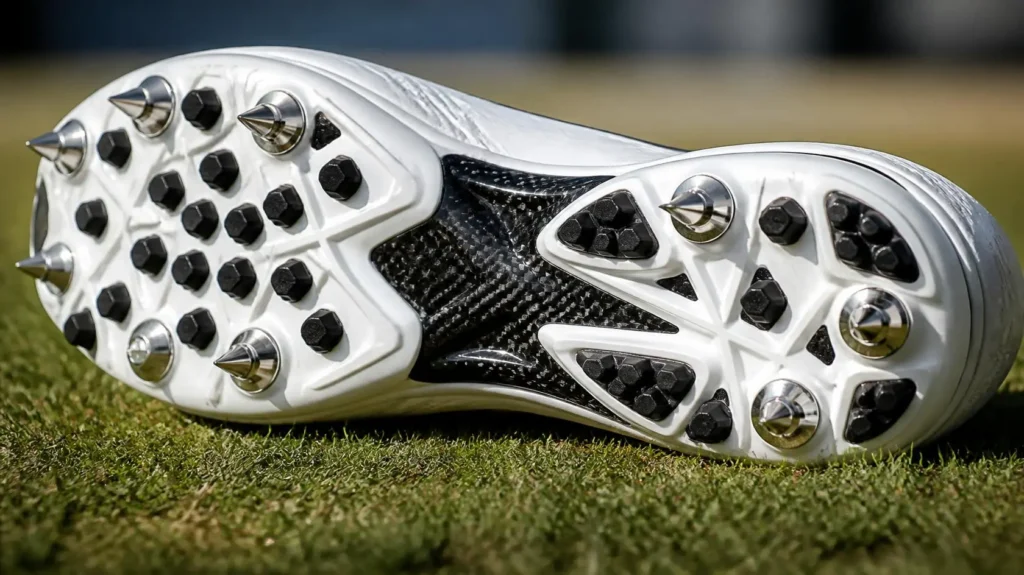
- Grip and Traction Layout: Choose between full metal spikes for damp turf wickets, molded rubber studs for hard synthetic surfaces, or hybrid spike arrangements that adapt across varied conditions.
- Weight vs. Durability: Lightweight footwear builds speed for aggressive fielders, while heavy-duty, reinforced constructions offer long-lasting durability for fast bowlers operating on abrasive grounds.
Also read more Cricket Gears & Equipment from our articles.
Selecting Footwear by Playing Role
Matching your footwear to your primary role on the team ensures optimal functionality and comfort on match day.
Batting Requirements
Batters need low-flex soles and reinforced toe boxes. Minimal flex through the midfoot provides stability during power shots, while padded uppers offer protection against high-speed Yorkies striking the best cricket shoes.
Bowling Requirements
Fast bowlers need robust footwear with reinforced heel counters, high-cut ankle collars, and durable metal spike patterns. Maximum cushioning around the heel absorbs delivery impact, protecting against shin splints and lower back strain.
Fielding and All-Round Performance
All-rounders and outfielders thrive in lightweight, flexible shoes featuring low-profile spike layouts or versatile rubber studs. Flexibility allows natural foot articulation during rapid lateral movement and long chases down the boundary.
Read Official ICC Playing Regulations on footwear standards.
How to Maintain Your Cricket Shoes
Proper maintenance extends the lifespan and retains the performance characteristics of your footwear:
- Clear mud, grass, and dirt from the spikes and outsole immediately after every match.
- Clean synthetic uppers with a damp cloth and mild soap; avoid fully submerging footwear in water.
- Air-dry shoes naturally at room temperature, stuffing the interiors with paper to absorb residual moisture and retain shape.
- Periodically check and tighten removable spikes using a standard spike spanner to prevent thread damage.
Frequently Asked Questions
1. What makes a cricket shoe suitable for batting?
Ans. Batting footwear features a wide, rigid base, minimal sole flex, and reinforced toe box protection. This combination optimizes energy transfer into shots while safeguarding toes against direct impacts from yorkers.
2. How important is arch support in cricket footwear?
Ans. Arch support is critical for maintaining alignment during long hours on the field. Proper support reduces muscle fatigue in the calves and lowers the risk of plantar fasciitis and overpronation injuries.
3. Can I use the same pair of shoes for both bowling and fielding?
Ans. While multi-purpose hybrid shoes work well for all-rounders, dedicated fast bowlers require specialized shoes with higher ankle support and heavier heel cushioning that pure fielding shoes lack.
4. Are metal spikes better than rubber studs?
Ans. Metal spikes provide superior grip on natural grass and damp turf pitches. Rubber studs are preferred on artificial, synthetic, or hard dry surfaces where metal spikes cannot penetrate effectively.
5. How often should cricket shoes be replaced?
Ans. Active players playing weekly should replace their shoes every 6–12 months, or when the midsole loses shock absorption and the outsole traction pattern becomes worn.
Finding Your Ideal Pair
Investing in the best cricket shoes tailored to your role is one of the most effective ways to boost confidence, maintain pitch grip, and protect your body from unnecessary injuries. Use these evaluation points to choose footwear that aligns with your position, climate, and typical pitch conditions for the ultimate match-day performance.