There is something almost magical about a cricket ball that darts through the air at the last moment, leaving a batter completely bamboozled. That fraction of a second when trajectory defies expectation is the hallmark of swing bowling. In this comprehensive guide, we unpack what swing bowling is, the precise aerodynamic science behind it, and step-by-step techniques to help you master this game-changing skill.
Who produces lateral movement in cricket, what causes it, and how can you add it to your bowling arsenal? Swing bowling occurs when a fast bowler uses seam orientation, wrist positioning, surface asymmetry, and delivery speed to manipulate airflow around the ball, causing it to curve sideways through the air before pitching.
What is Swing Bowling?
Swing bowling is a specialized fast bowling style in cricket where the ball moves sideways through the air rather than relying strictly on pitch surface deviation or spin rotation. Unlike seam bowlers who depend on the seam making contact with the pitch surface to alter direction, or spin bowlers who impart heavy revolution to turn off the turf, a swing bowler manipulates aerodynamic forces during flight.
For pace bowlers, mastering swing bowling creates uncertainty in the batter’s mind long before the ball pitched. Lateral movement late in flight forces batters into tentative footwork, leading to edged catches to the slip cordon, mis-timed shots, and middle-stump dismissals.
  Conventional Outswing (Right-Handed Bowler to Right-Handed Batter)

  [Shiny Side]  ====> Smooth Flow (Laminar)    \
                                                ===> Net Force (Swerves Away)
  [Rough Side]  ====> Turbulent Flow (Seam)    /
The Physics Behind Swing Bowling
The foundation of swing bowling relies entirely on fluid dynamics and air density. According to official International Cricket Council (ICC) and Marylebone Cricket Club (MCC) regulations, a men’s regulation match ball weighs between 155.9g and 163g (5.5 to 5.75 ounces) with a high-profile raised primary seam.
As the ball travels toward the batter, air flows past its surface in two distinct states:
- Laminar Flow: Smooth, streamlined airflow that remains attached to the surface longer before separating.
- Turbulent Flow: Disrupted, chaotic airflow that separates earlier or creates pockets of low pressure.
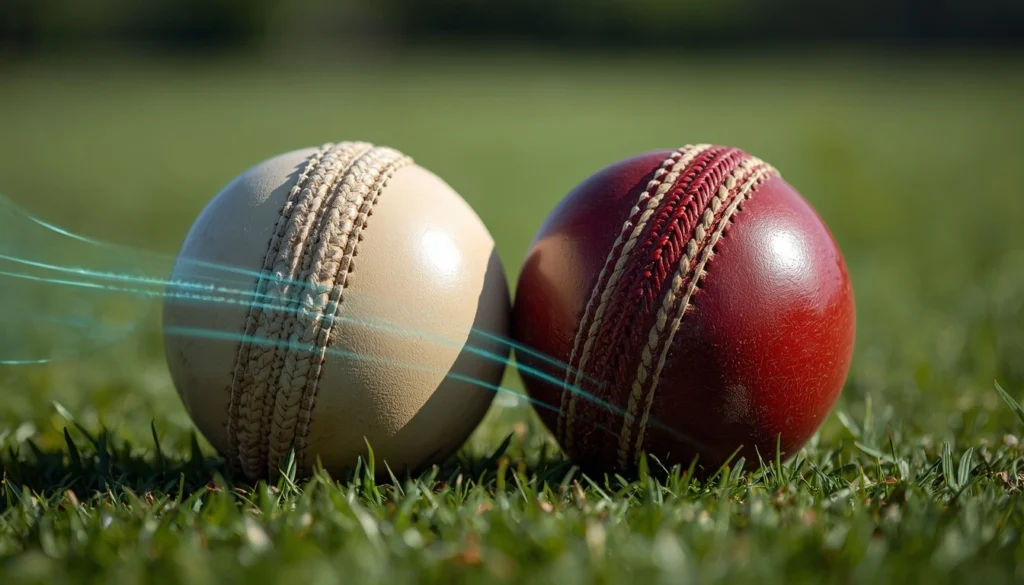
When a bowler angles the seam or creates a contrast between a smooth, polished side and a rough, deteriorated side, the air separates unevenly on opposite flanks of the ball. This asymmetric airflow creates a pressure differential. Air flows faster over the side triggering early turbulence, yielding a net aerodynamic lateral force that pushes the ball sideways.
Key Factors Influencing Ball Movement
Several key factors dictate how much movement a bowler can extract:
- Ball Condition: Contrast between a polished, glossy half and an unpolished, rough half is critical for persistent swing.
- Seam Position: Holding the primary seam stable at an angle guides boundary layer separation and keeps trajectory true in flight.
- Shine Maintenance: Fielding teams constantly polish one half using sweat and clothing contact to preserve laminar flow.
- Delivery Pace: Conventional movement peaks at medium-fast pace (approx. 90–120 km/h), whereas reverse movement requires high speeds (above 135–140 km/h).
- Atmospheric Environment: High humidity, overcast skies, and cooler conditions alter air density, enhancing overall pressure differences across the ball surface.
Conventional Swing vs Reverse Swing: Key Differences
While both phenomena rely on boundary layer pressure differentials, conventional and reverse movement operate under contrasting conditions:
| Aerodynamic Feature | Conventional Swing | Reverse Swing |
| Ball Condition | New or semi-new ball (1 to 40 overs) | Heavily worn ball (40+ overs) |
| Optimal Speed | Moderate to medium-fast (90–120 km/h) | High velocity (135–145+ km/h) |
| Airflow Mechanics | Seam trips air into turbulence on seam side | Both sides turbulent; shiny side separates later |
| Movement Direction | Ball swerves towards the rough/seam side | Ball swerves towards the shiny side |
Official rules and regulations on ball condition from the International Cricket Council (ICC).
Techniques to Deliver Conventional Swing
To master conventional outswing and inswing, focus on foundational grip, wrist firmness, and release consistency:
- The Grip: Position your index and middle fingers closely along the top of the seam, supported underneath by your thumb directly along the bottom seam line.
- Seam Angle: Tilt the primary seam approximately 10 to 20 degrees toward first slip for an outswinger, or toward fine leg for an inswinger.
- Wrist Posture: Keep the wrist locked and upright through the delivery stride. For outswing, finish with the back of your wrist pointing slightly toward the slip cordon at release.
- Follow-Through: Maintain momentum straight down the pitch channel, ensuring your fingers run smoothly off the seam without applying axis-altering spin.
Techniques to Generate Reverse Swing
As the match progresses and the ball becomes worn, bowlers switch strategies to execute reverse swing:
- High Delivery Speed: You must bowl with maximum velocity (typically exceeding 135 km/h) to force air on both sides into immediate boundary layer turbulence.
- Upright Seam Orientation: Keep the seam pointing straight toward the target rather than angled wide.
- Strong Snap at Release: A forceful, snappy wrist release ensures the ball maintains rotational stability, preventing wobble in flight.
- Maintain Unilateral Shine: Ensure one half remains dry and heavily polished while allowing the opposing half to stay dry, scuffed, and rough.
Common Errors and Technical Corrections
- Wobbling Seam Position:
- Correction: Keep your wrist rigid through delivery and release the ball with clean backspin off your fingertips.
- Shining Both Sides Equally:
- Correction: Assign one team member to manage polishing during overs, ensuring only one designated hemisphere is worked on.
- Trying to Bowl Too Fast for Conventional Swing:
- Correction: Focus on seam angle precision and smooth release rhythm rather than full-effort pace when the ball is brand new.
Training Drills for Bowlers
Improve your seam control and aerodynamic mastery using these practical drills:
- Single-Side Shine Drill: Work with a practice ball, keeping one half completely dry and polished. Bowl 18 to 24 consecutive deliveries, tracking the exact deviation off the flight path.
- Mirror Seam Alignment: Stand in front of a mirror during warmup. Replicate your release angle repeatedly to build muscle memory for a rigid wrist position.
- Target Towel Line Drill: Lay a small towel on a good length outside off-stump. Practice releasing outswingers that start on the stumps and curve late to land directly on the target.
- Video Analysis Session: Record your bowling action from behind the stumps in high frame rates to verify whether the seam remains upright and stable throughout flight.
Read our Cricket Gears & Equipment guide page to relevant article about another Crikcet biomechanics.
Frequently Asked Questions
1. What physical force causes a cricket ball to swing in the air?
Ans. Swing bowling occurs due to aerodynamic pressure differentials created across the surface of the ball. The raised seam and contrast between a smooth, polished side and a rough side cause air to flow at different speeds, creating lower pressure on one side that pulls the ball laterally.
2. How does conventional swing differ from reverse swing?
Ans. Conventional swing happens with newer balls at medium-fast speeds (90–120 km/h), causing the ball to curve away from the polished side. Reverse swing happens with worn balls at higher speeds (135+ km/h), where airflow turbulence causes the ball to swerve toward the polished side.
3. What is the ideal seam angle for bowling an outswinger?
Ans. For an effective outswinger to a right-handed batter, angle the seam roughly 10 to 20 degrees toward the slip fielders. Keep the wrist firm and release the ball with smooth backspin so the seam remains stable in flight.
4. Why do overcast weather conditions increase swing movement?
Ans. Overcast skies and high humidity increase heavy air density and keep moisture trapped near the turf. This damp atmosphere helps preserve the polished side of the ball while creating stronger pressure differences during flight.
5. What is the official weight of a regulation cricket ball used for swing bowling?
Ans. Under MCC Law 4, a standard men’s regulation leather cricket ball must weigh between 155.9 grams and 163 grams (5.5 to 5.75 ounces). Women’s official match balls weigh between 140g and 151g, while junior balls weigh between 133g and 144g.
Conclusion
Mastering swing bowling blends physics with refined physical skill. By managing ball shine, maintaining steady seam alignment, and adapting your speed to match ball age, you can consistently move the ball late in flight. Work on these seam alignment drills during your nets practice to unlock genuine lateral movement and elevate your bowling performance.